I have worked with very different personalities over the years. Some people are naturally comfortable taking a lot of space in a meeting. Others speak less, listen more and usually wait until they have something useful to add.
I don't think one style is automatically better than the other. But in partnerships, I have noticed that the quieter person can sometimes be more influential with the partner than they appear internally.
Partners experience your consistency. Internal leaders often experience your visibility. Those are not always the same thing.
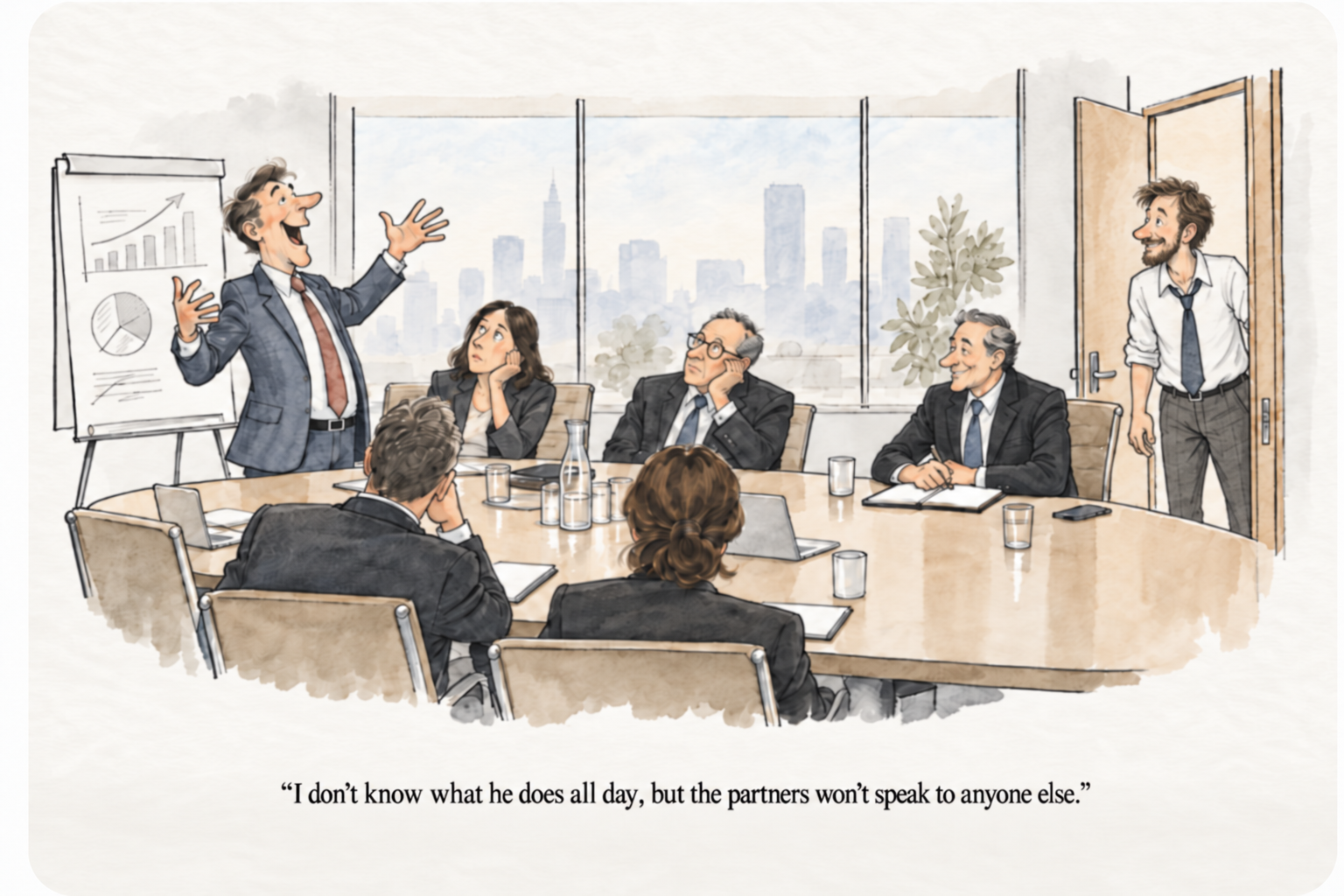
Partners see what happens between the meetings
A partner normally does not care who spoke the most in your internal meeting or who had the most polished presentation.
They care if you did what you said you would do.
Did you come back with the answer? Did you make the introduction? Did you explain honestly that something was not going to happen? Did you remember the issue they raised three weeks ago?
A lot of trust is built through fairly ordinary things repeated over time.
Listening matters as well. Sometimes the useful part of a partner conversation comes after the obvious discussion is finished. If you are always waiting for your turn to speak, you can miss why the partner is really frustrated, why they are not investing, or why an opportunity that looks good internally is actually going nowhere.
That does not require being quiet. It requires being interested enough to listen.
Internal visibility works differently
Inside a company, people often have much less exposure to that part of the job.
A manager might see a forecast call, a QBR, an internal presentation or a few meetings. They do not necessarily see the conversations where trust was built, the problem that was resolved before it became an escalation, or the partner who called you directly because they knew they would get a straight answer.
So there can be a gap.
The partner may see someone as trusted and effective, while internally that same person can appear less influential because they are not constantly making their work visible.
I don't think the answer is to start performing for internal audiences. But ignoring the problem completely is probably a mistake too.
Quiet cannot mean passive
There is also a danger in romanticising this.
Being a good listener does not help much if you avoid difficult conversations. A Partner Manager still needs to challenge partners, push Sales when needed, defend a position, say no, escalate something that is not working and sometimes tell people things they do not particularly want to hear.
Influence without authority still requires influence.
If a partner is not progressing opportunities, I need to address it. If the internal team is creating a problem for the partner, I need to say that as well.
Being quieter should describe how you communicate, not your willingness to act.
Your work still needs to be visible
I also learned that good work does not always explain itself.
You can have strong partner relationships and still leave internal leaders with an incomplete picture of your contribution if you never make the commercial connection clear.
That does not mean sending an update every time you have a useful conversation.
For me it means being able to explain, quite simply, what changed because of the work.
For example, this partner was not engaged, now they are working on these accounts. This opportunity was stuck, now there is a customer meeting and a clear next step. This relationship needed technical support, we fixed that dependency and the partner can now progress without the same level of help.
That is much more useful than trying to look busy.
Different styles can work
Partnerships is a strange role in that a lot of the work depends on relationships, but the commercial result still needs to be visible.
Some people will build influence through energy and presence. Others will build it more through consistency, preparation, listening and follow-through.
Both can work.
The problem starts when visibility is mistaken for influence, or when someone who prefers a quieter style assumes good relationships will automatically be understood internally.
They probably will not.
A Partner Manager still needs to make the work visible. I just don't think that requires becoming the loudest person in the room.